
Last updated October 16, 2026
 AC repair
 Furnace & heating
 Heat pumps
 Ductless mini splits
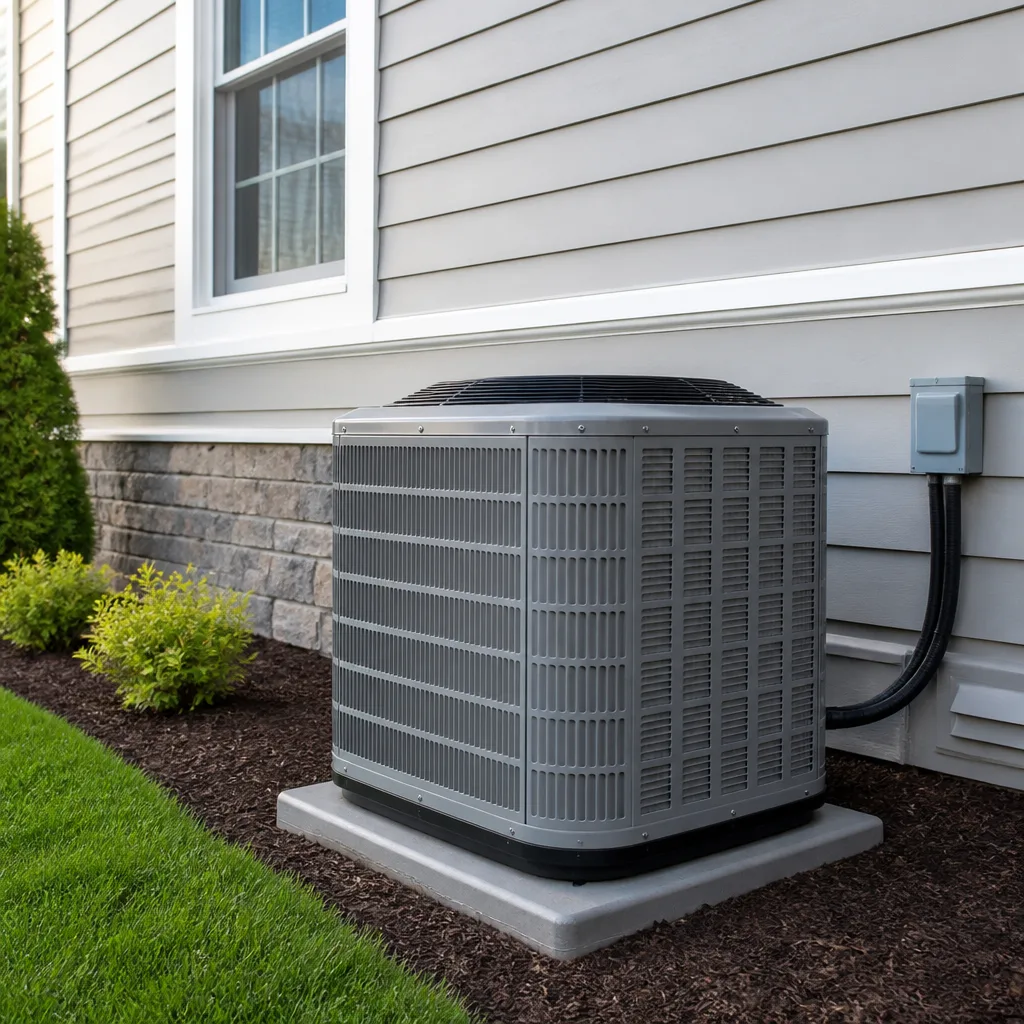 Carrier
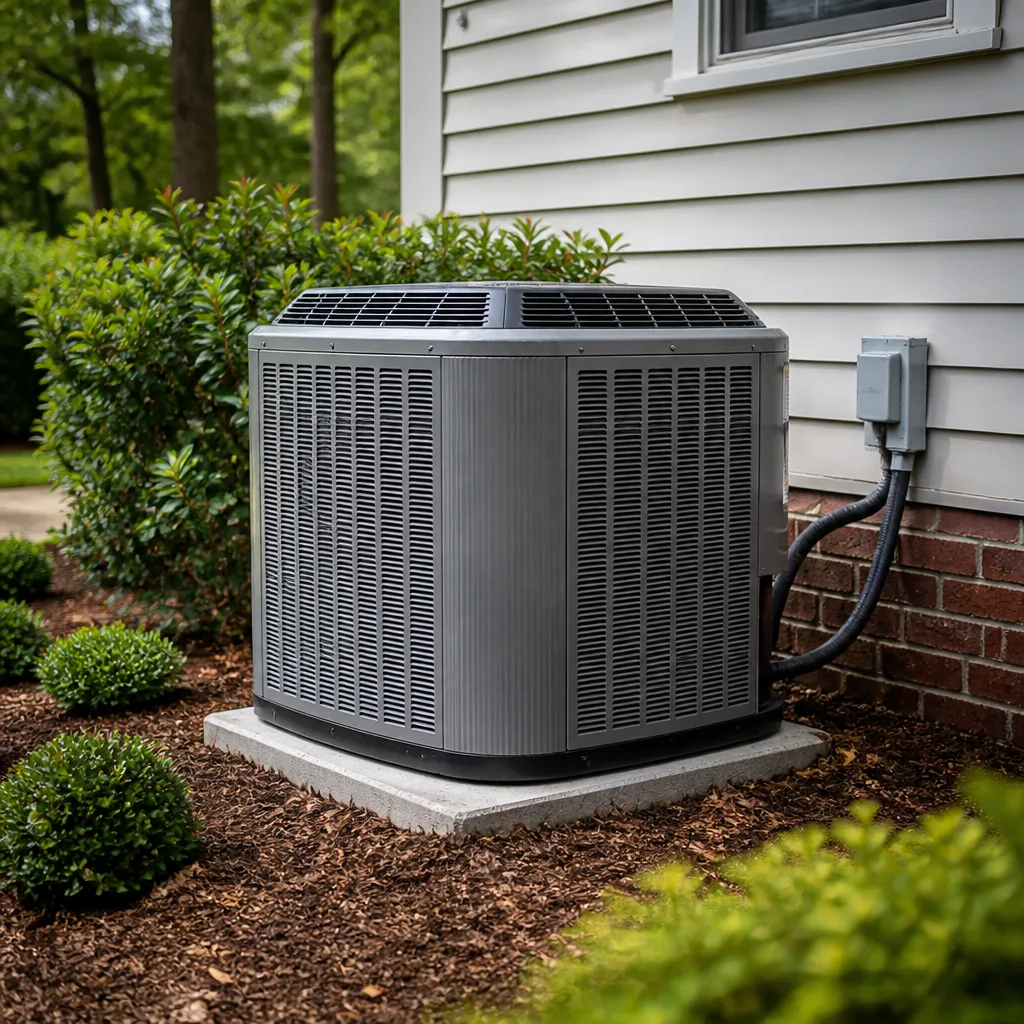 Trane
Trane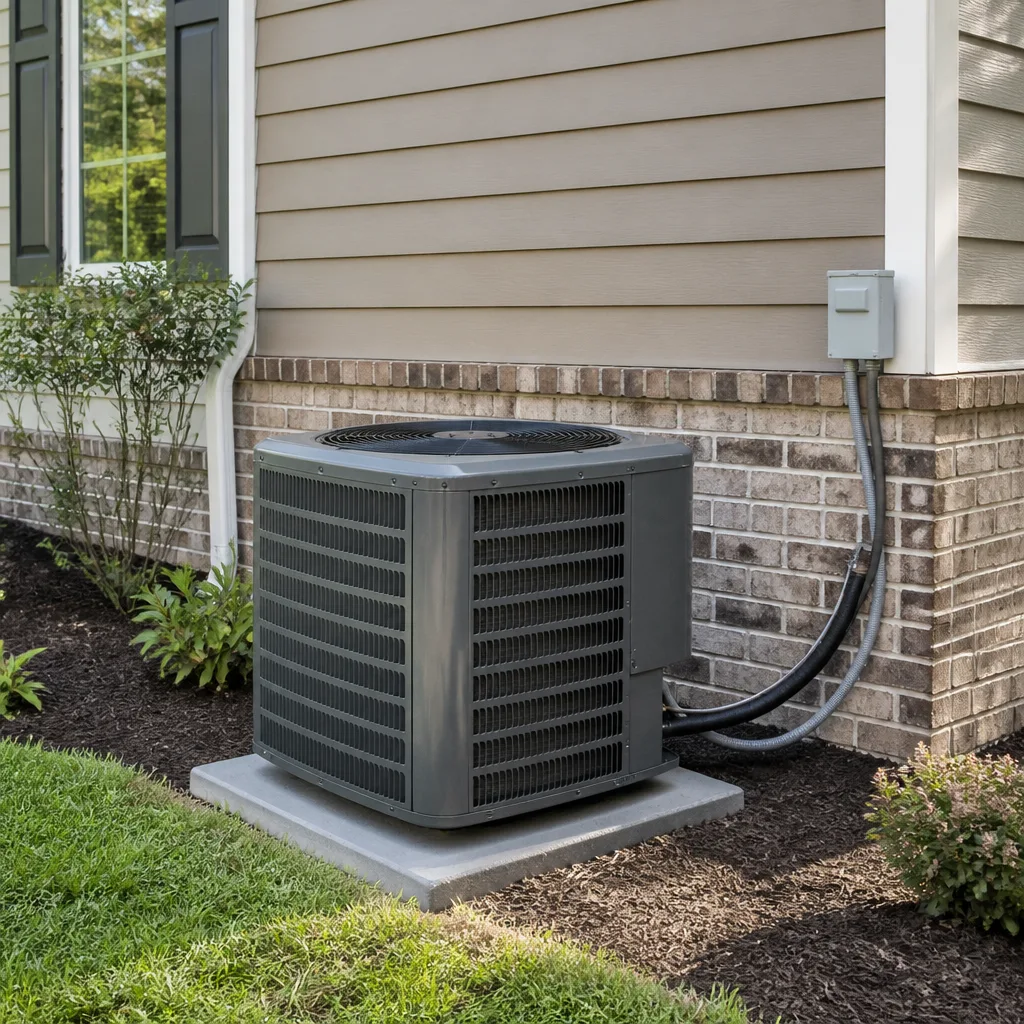 Goodman
Seasonal tune-up and full diagnostic on your Carrier, Trane, or Goodman system - readings shown to you before any repair is proposed
Diagnosis first, numbers second - you approve the repair price before a single part goes in.
Get your free estimateDIY vs Professional HVAC: The Brooklyn Homeowner’s Decision Guide
Here’s the thing nobody tells Brooklyn homeowners: the line between “safe DIY” and “you just voided your insurance” isn’t about how handy you are. It’s about three separate rulebooks that almost never get explained together. New York City building code, federal EPA Section 608, and your standard homeowner’s insurance policy each draw the line in a different place. Replace a thermostat? Legal, sensible, and a good Saturday project. Recharge refrigerant? That’s a federal violation anywhere in the country, including Brooklyn. This guide walks through exactly where the line sits, what it costs when you cross it, and the middle path that saves money without creating a problem that surfaces when you try to sell your brownstone or co-op.
Quick Answer
Brooklyn homeowners can safely handle filter changes, thermostat battery replacements, condensate line flushing, and basic thermostat wiring swaps. Everything else, from capacitor replacement to refrigerant work to any modification of gas lines or electrical panels, requires either a NYC-licensed professional or a permit. The DIY tasks that feel simple are often the ones that create the most expensive paper-trail problems when a DOB inspector or insurance adjuster looks at the work later.
Styles & brands we work with
Table of Contents
- The Three Rulebooks: NYC Code, EPA Section 608, and Your Insurance Policy
- What a Brooklyn Homeowner Can Legally Do (The Short List)
- The Paper-Trail Problem: What DIY Work Looks Like at Resale or Claim Time
- Cost of Mistakes: What Common DIY Errors Actually Cost to Fix in Brooklyn
- The Middle Path: What to Do Yourself and What to Pay For
- How to Evaluate a YouTube HVAC Tutorial Before You Follow It
- What Makes Brooklyn HVAC Different: Age, Building Type, and Climate
The Three Rulebooks: NYC Code, EPA Section 608, and Your Insurance Policy
Most DIY conversations start with “am I skilled enough to do this?” The better question in Brooklyn is “will this work pass inspection if anyone ever looks?” Because someone will look. A co-op board, a DOB inspector responding to a neighbor complaint, an insurance adjuster after a water leak, a buyer’s home inspector during a sale. The work doesn’t just need to function. It needs to be defensible.
Here’s what each rulebook actually says:
EPA Section 608: The Hardest Line
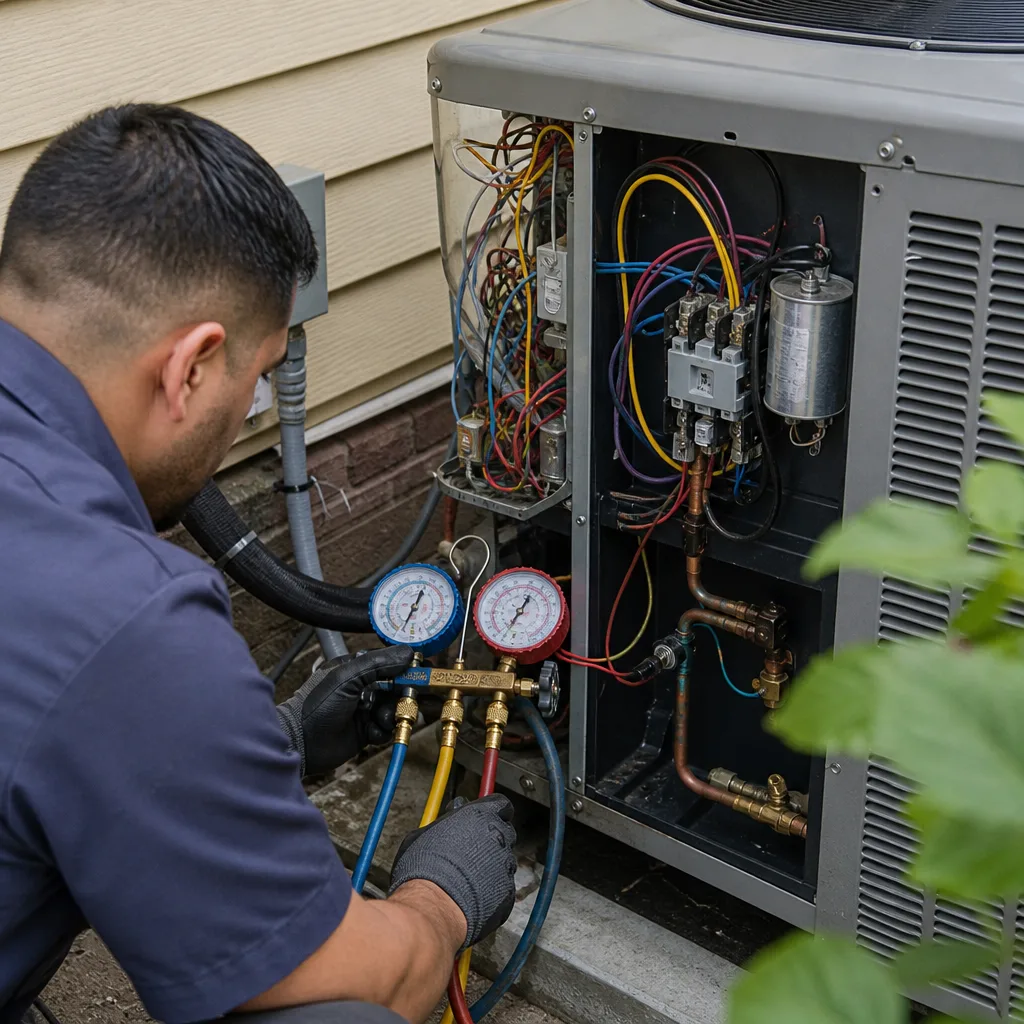
Federal law under Section 608 of the Clean Air Act says no one may purchase or handle refrigerant without EPA Section 608 certification. Not the homeowner, not an unlicensed handyman, not a talented neighbor. This covers R-410A, the refrigerant most common in systems installed after 2010, and R-22, found in older Brooklyn units. The fine for a single violation starts around $37,500 and goes up from there. This is the rulebook with the least wiggle room. If the task involves refrigerant, stop. There is no DIY version.
NYC Building Code and DOB Permits
New York City requires permits and licensed professionals for any work that involves gas lines, significant electrical work, or structural changes. See our detailed HVAC Permits, Codes & Inspections in NY: What You Need to Know for the full picture. For HVAC specifically, this means furnace installations, boiler work, gas line modifications, and most whole-system replacements require a licensed contractor pulling a permit. A homeowner working without a permit on these items creates what’s called an “unpermitted alteration” – and the DOB can issue a violation that stays attached to the property record. When you sell, the buyer’s attorney will find it. When you file an insurance claim, the adjuster will look for it.
Homeowner’s Insurance: The Silent Void
Most policies contain language that excludes coverage for damage caused by work that required a licensed professional or a permit but was done by the homeowner. That means if you rewire a thermostat incorrectly, create a short, and damage the control board, that’s likely not covered. If you install a condensate pump with improper drainage and the resulting leak damages hardwood floors in your Park Slope apartment or your downstairs neighbor’s ceiling in a Clinton Hill brownstone, the claim can be denied because the work wasn’t done by a licensed contractor. The work itself might have been competent. The problem is the legal status of who did it.
What a Brooklyn Homeowner Can Legally Do (The Short List)
The intersection of these three rulebooks is smaller than most homeowners assume. Here’s what survives all three:
- Replace air filters. Legal, encouraged, and the single highest-impact maintenance task. In Brooklyn apartments with window units or through-wall units, check the unit’s built-in filter monthly during summer. In brownstones with central air, the filter at the air handler should be checked every 30-60 days depending on pet hair and construction dust.
- Change thermostat batteries. No permit, no license, no insurance concern. This fixes most “my AC stopped working” calls that turn out to be a dead AA battery.
- Flush a condensate drain line. A homeowner can pour a cup of white vinegar into the condensate line access point quarterly to prevent algae buildup. This is the single most common cause of AC water leaks in Brooklyn homes and it’s fully DIY-legal.
- Replace a thermostat with an identical or compatible model. This is where it gets nuanced. Swapping a thermostat that uses the same wiring configuration is homeowner territory. Installing a smart thermostat that requires a C-wire when one doesn’t exist means running new wire, which crosses into electrical work that NYC code says requires a licensed electrician or HVAC contractor. The swap is fine. The new wire is not.
- Clear debris from around an outdoor condenser unit. Leaves, trash, snow, and that Brooklyn-specific accumulation of construction dust and pigeon debris around a window unit or through-wall sleeve all restrict airflow. Clearing it is maintenance, not modification.
That’s the list. Anything involving refrigerant, gas lines, electrical panels, capacitor replacement, compressor work, or evaporator coil cleaning is professional territory. Not because the tasks are impossible to learn, but because doing them without the right license creates legal exposure that costs more than the service call.
The Paper-Trail Problem: What DIY Work Looks Like at Resale or Claim Time
In Brooklyn, HVAC work is not invisible. It leaves marks. A DOB inspector, insurance adjuster, or home inspector can spot unpermitted work in ways most homeowners never anticipate. Here’s what they look for:
- Permit history gaps. If the building’s DOB record shows a gas boiler installed in 2018 but no plumbing or boiler permit associated with that date, the assumption is the work was done illegally. Even if a previous owner did it, the current owner inherits the problem. Brooklyn co-op boards in areas like Fort Greene and Park Slope routinely require permit history for any sale.
- Manufacturer serial numbers. A condenser unit’s serial number includes the manufacturing date. If that unit was installed after the NYC energy code changed and there’s no corresponding permit, it’s a flag. A buyer’s inspector in a Williamsburg condo or a Midwood single-family home will note it in the inspection report.
- Visual installation quality. Adjusters and inspectors recognize professional work. Straight refrigerant line sets, properly sloped condensate drains, code-compliant electrical disconnects, proper clearances around equipment. DIY work often fails on at least one of these visual cues, and that triggers a deeper look.
- Warranty registration. Most manufacturer warranties – including Carrier, Trane, Goodman, Lennox, and Bryant – require installation by a licensed HVAC contractor for the warranty to be valid. If the system was installed DIY and the compressor fails two years later, the manufacturer denies the claim. That’s not hypothetical. That’s warranty terms.
The cost of a paper-trail problem doesn’t show up the week you do the work. It shows up five or eight years later, during a sale or after a flood, when the buyer’s attorney or the insurance adjuster asks for documentation that doesn’t exist. In our experience with AC installation in Brooklyn, the homes that sell smoothly are the ones where every piece of HVAC work can be traced to a permit and a licensed contractor.
Cost of Mistakes: What Common DIY Errors Actually Cost to Fix in Brooklyn
Most DIY failure stories end with a professional being called to fix the damage. Here’s what the most common mistakes actually cost, with realistic Brooklyn pricing. For a detailed breakdown, see our HVAC Cost Breakdown: The Brooklyn Homeowner’s Reference for 2026. These aren’t worst-case numbers. They’re what we see when a homeowner’s attempted fix comes to us:
- Wrong capacitor size installed on a condenser unit: A capacitor is a $20-$45 part, which is why it’s tempting. But installing the wrong microfarad rating causes compressor overheating. Best case, the compressor’s internal thermal overload trips and the AC stops working. Worst case, the compressor windings burn out. Cost to replace a compressor in Brooklyn: $1,800-$3,200 depending on brand (York, Rheem, Daikin, and Bryant units all have different compressor prices) and access. The capacitor mistake: $20 in parts creates $3,000 in damage.
- Improper condensate drain slope: A drain line that doesn’t slope downhill backs water up into the air handler, then onto the floor, then through the ceiling of whatever is below. In a Brooklyn brownstone with original hardwood, that’s not a $200 fix. That’s floor refinishing or replacement at $5-$15 per square foot, plus drywall repair below. And if the leak reached a downstairs neighbor’s unit, their insurance company comes after your policy, which is now reviewing whether the work was permitted.
- Kinked refrigerant line set: Bending a refrigerant line too sharply restricts flow and stresses the compressor. Depending on where the kink is and whether refrigerant leaked, repair costs range from $400 to $1,800. The $100 in pipe and tools you saved doesn’t offset that.
- Incorrect thermostat wiring after a smart thermostat install: Cross-wiring can short the control board on the furnace or air handler. A replacement control board for a Carrier or Trane system runs $350-$800 installed in Brooklyn. The smart thermostat you installed yourself is now the most expensive thermostat in the neighborhood.
The pattern: DIY HVAC mistakes are cheap at the point of the mistake and expensive at the point of the consequence. It’s not that homeowners can’t learn the skill. It’s that the first attempt is also the final exam, and the cost of a low grade is measured in thousands.
The Middle Path: What to Do Yourself and What to Pay For
The rational answer for most Brooklyn homeowners isn’t “never touch anything” or “do everything yourself.” It’s a hybrid. If you’re deciding who to call, our How to Hire a HVAC Contractor in Brooklyn: A Step-by-Step Guide can help. You handle the tasks that are legal, low-risk, and high-frequency. A licensed contractor handles everything else. Here’s what that looks like in practice:
Homeowner Tasks (Monthly to Quarterly)
- Replace or clean air filters every 30-60 days (more often during construction or heavy pollen season in Brooklyn’s tree-lined neighborhoods like Ditmas Park and Prospect Heights)
- Flush the condensate line with white vinegar quarterly
- Check thermostat batteries every spring and fall
- Clear debris from around any outdoor condenser or through-wall unit
- Listen for unusual noises and note when they started so the tech has useful information
Professional Tasks (Annually or As Needed)
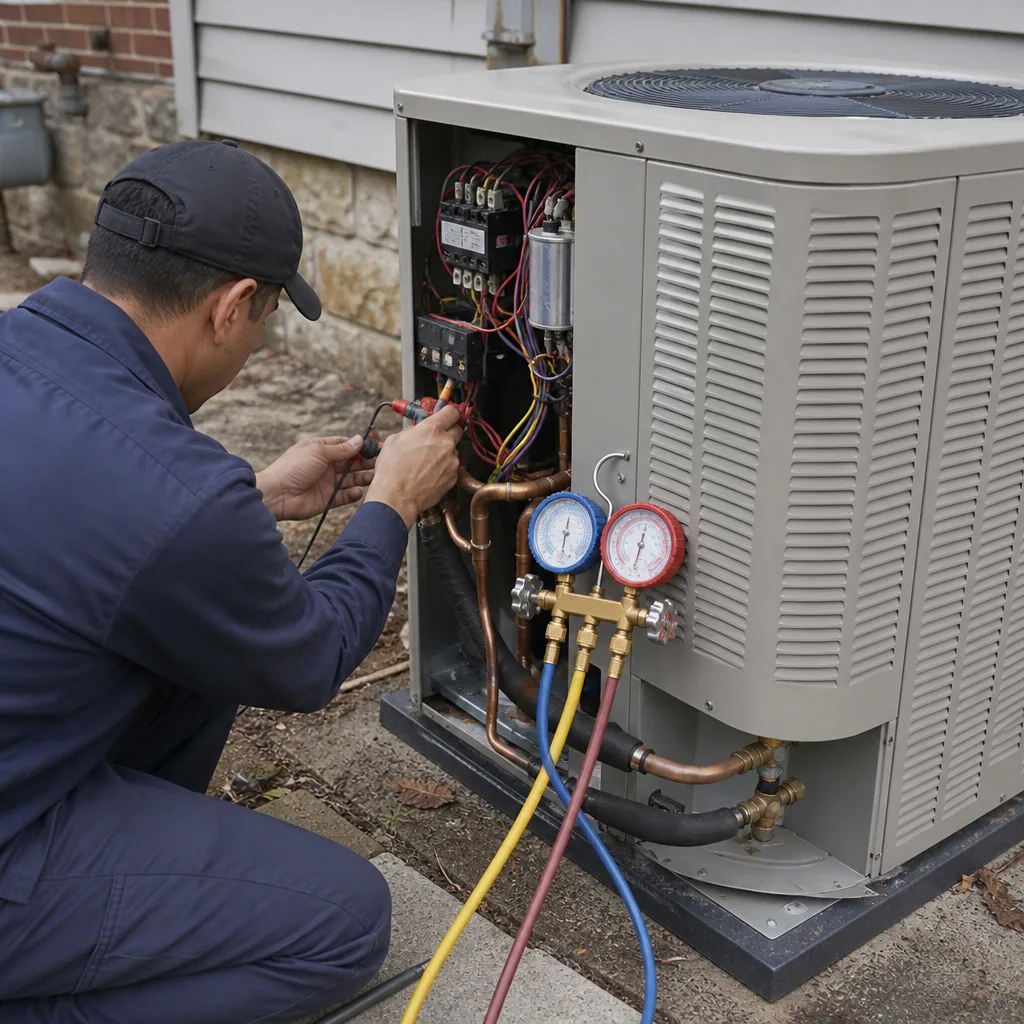
- Annual AC tune-up before summer peak: coil cleaning, refrigerant level check, capacitor testing, electrical connection tightening. Realistic Brooklyn cost: $120-$250.
- Annual furnace or boiler inspection before winter: burner cleaning, heat exchanger inspection, safety shutoff testing, gas line check. Realistic Brooklyn cost: $130-$280.
- Any repair involving refrigerant, gas, electrical, or compressor work. Cost varies, but a written estimate should always come first.
The realistic annual cost for the professional portion of this hybrid is $250-$500 per year for seasonal maintenance, plus repairs when they’re needed. That’s the cost of keeping the system running safely, keeping the permit history clean, and keeping insurance coverage intact. It’s not the cost of an emergency. It’s the cost of not having one.
When you work with a company like Meadowsweet Heating and Air Brooklyn, the maintenance visit also produces documentation. A written report of what was checked, what was found, and what was done. That’s the paper trail that protects you later, and it’s free with the service.
How to Evaluate a YouTube HVAC Tutorial Before You Follow It
YouTube has thousands of HVAC tutorials. Some are excellent. Some are produced by someone who learned HVAC three weeks ago and has an opinion. Some are legal in Texas and illegal in New York. Here’s the filter to run every tutorial through before you pick up a tool:
- Is this person licensed? A licensed HVAC contractor will usually state their credentials. If the tutorial creator’s channel doesn’t mention licensing, experience, or credentials anywhere, assume they have none. That doesn’t automatically mean the advice is wrong, but it means there’s no accountability behind it.
- Is this legal in New York City specifically? A tutorial produced in Florida or Arizona operates under different building codes, different climate assumptions, and different legal requirements. Gas work that’s homeowner-legal in some states is not homeowner-legal in NYC. The tutorial creator has no reason to know or care about your local rules.
- Does this void the equipment warranty? Most manufacturer warranties (Carrier, Trane, Lennox, Goodman, Rheem, York, Daikin, Bryant, American Standard) require professional installation and service for warranty validity. A tutorial that walks you through replacing a part yourself may save you $150 in labor while voiding a $3,000 compressor warranty. That’s a bad trade.
- What does the creator say about what could go wrong? Good tutorials spend as much time on failure modes as on success steps. If the video makes it look easy, doesn’t mention what happens if it goes wrong, and doesn’t tell you when to call a professional, it’s not a tutorial. It’s a highlight reel.
- Can you afford the mistake? The real question behind every DIY decision. If the tutorial is about changing a filter, the downside risk is near zero. If it’s about opening a refrigerant line, the downside risk is a $37,500 EPA fine. The tutorial doesn’t pay that fine for you.
What Makes Brooklyn HVAC Different: Age, Building Type, and Climate
Brooklyn’s housing stock is older than most of the country’s, and that changes the HVAC conversation in specific ways. If you live in a brownstone built between 1890 and 1920 in neighborhoods like Bed-Stuy, Crown Heights, or Park Slope, your home was built before central air conditioning existed. That means the HVAC system was retrofitted, sometimes elegantly and sometimes not. Ductwork runs through closets and soffits that weren’t designed for it. Condenser units sit in backyards that date to the Tammany Hall era. The work requires understanding old buildings, not just new equipment.
Brooklyn’s climate also shapes the workload. The borough gets hot and humid summers – regular 90-plus degree stretches in July and August – and cold, damp winters. That humidity is the hidden factor. A condensate line that works fine in Arizona can’t handle Brooklyn’s summer moisture load when paired with a system that’s slightly undersized. A DIY homeowner who installs a condensate pump without accounting for the humidity-driven volume ends up with a water problem in August. A professional who’s worked on Brooklyn systems has seen that failure mode dozens of times and installs accordingly.
The building type matters too. In a single-family home in Marine Park or Mill Basin, the homeowner has total control over the HVAC system and full responsibility for what happens to it. In a condo in Downtown Brooklyn or a co-op in Cobble Hill, the building’s rules may require board approval for any system modification, and the board will almost always require a licensed contractor with proof of insurance. A DIY condenser swap in a co-op can trigger a board violation, a fine, and a demand to restore the original system at your expense. That’s a paper-trail problem with a board meeting attached.
Common Mistakes to Avoid
- Buying refrigerant online and attempting a recharge. This is a federal violation under EPA Section 608, regardless of skill level. The fine starts around $37,500. The refrigerant seller is also violating the law. No homeowner should ever attempt this.
- Assuming the thermostat is the problem without checking the battery first. A dead thermostat battery is the single most common cause of “the AC won’t turn on” in Brooklyn. Checking the battery is free and takes two minutes. Replacing the thermostat without checking it costs $50-$300 and doesn’t fix anything if the battery was the issue.
- Installing a smart thermostat that requires a C-wire where none exists. This crosses from HVAC maintenance into electrical work. In NYC, that means a license. Running a C-wire incorrectly creates a short that damages the control board.
- Flushing the condensate line with bleach instead of vinegar. Bleach corrodes the PVC drain pipes over time and creates fumes. White vinegar does the same job without the corrosion. This is a small mistake but a common one.
- Skipping the annual professional inspection because everything “seems fine.” Refrigerant leaks don’t announce themselves. A system can lose 10-15% of its charge and still cool, while running 20-30% less efficiently. The electric bill goes up. The compressor works harder. By the time it “seems like a problem,” the repair is expensive.
- Replacing a capacitor with one you found at a hardware store based on physical size rather than microfarad rating. Capacitors that look identical can have different electrical ratings. The wrong rating overheats the compressor. This is the $20 part that creates the $3,000 repair.
- Doing DIY work in a rental or co-op unit without checking the lease or board rules first. A tenant who modifies an HVAC system can be held liable for full restoration costs. A co-op shareholder who does unapproved work can face board sanctions. In Brooklyn, the building’s rules are part of the code compliance.
See the difference
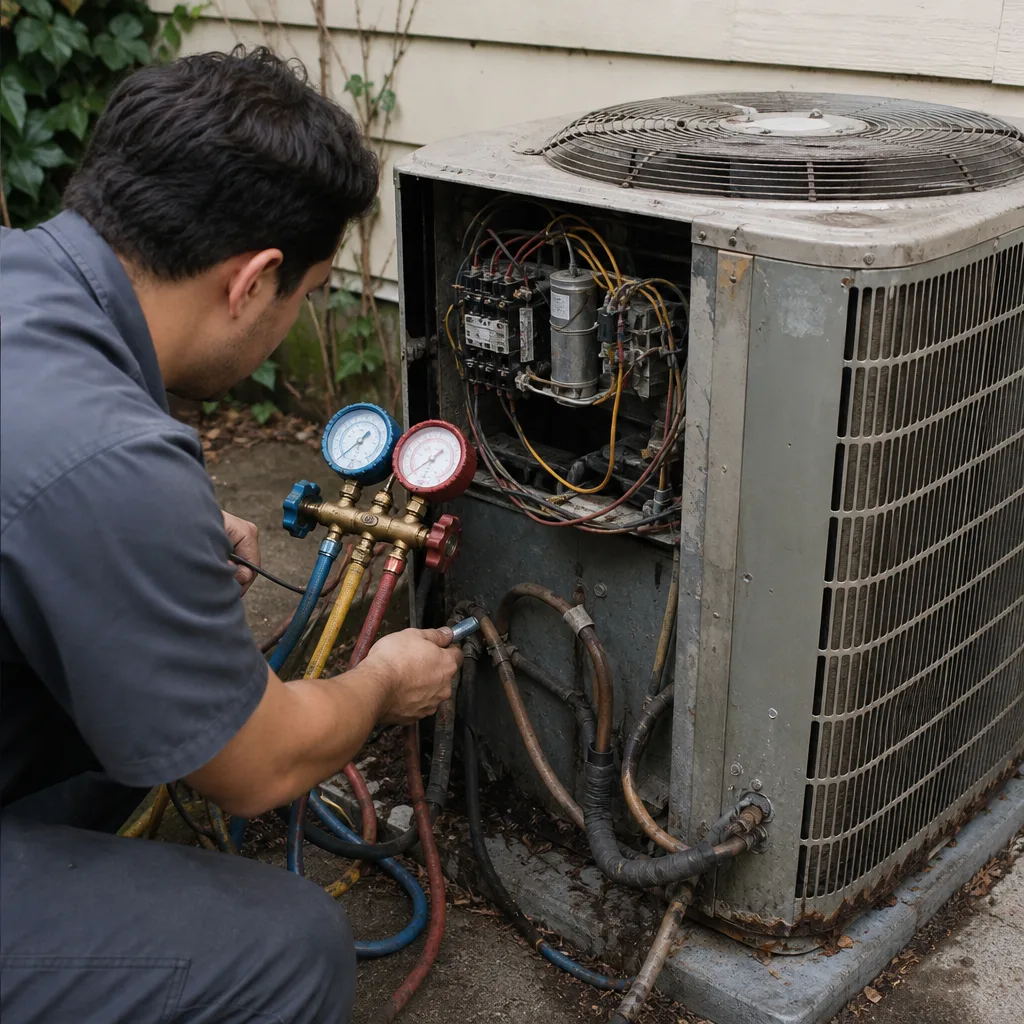 Before
 After
After Before
 After
After Before
 After
AfterWhen to Call a Professional
Call a licensed HVAC contractor when the work involves refrigerant in any form, gas lines, electrical panels, capacitors, compressors, evaporator coils, or any repair where the system needs to be opened up. Also call when a water leak from the system has reached floors, walls, or a downstairs neighbor – that’s no longer a maintenance issue, it’s a liability issue, and the insurance company will want to see that a professional handled it. If the system is making sounds that didn’t exist before – grinding, hissing, banging, clicking – call before those sounds turn into the more expensive version of the same problem. AC repair in Brooklyn is faster and cheaper when the problem is caught early. If you’re in a co-op or condo, call as soon as the board requests proof of licensed service. In Brooklyn’s older buildings, the board request is the first step in a formal review, and responding with a licensed contractor’s report is the fastest way to close it out.
Meadowsweet Heating and Air Brooklyn offers free estimates in Brooklyn – call (315) 873-2984. A live person answers, 24 hours a day. We’ll give you a written price before any work starts, and our technicians leave shoe covers on, drop cloths down, and a photo of the clean-up before they go.
Frequently Asked Questions
Yes, if the new thermostat uses the same wiring configuration as the old one. Swapping like-for-like is homeowner territory. Installing a smart thermostat that requires new wiring – like a C-wire for continuous power – crosses into electrical work that NYC code reserves for licensed professionals. If in doubt, the thermostat’s installation guide will tell you whether existing wires are sufficient.
You can replace air filters, change thermostat batteries, flush the condensate drain line with vinegar, clear debris from around outdoor condenser units, and swap a thermostat for a model with the same wiring. Everything else – refrigerant work, gas lines, electrical connections, capacitor replacement, compressor work – requires a licensed contractor and often a permit.
No. Federal law under EPA Section 608 requires certification to purchase or handle refrigerant, and the EPA does not issue homeowner certifications. Violations carry fines starting around $37,500. This is the one area where the legal line is absolute – there is no DIY version of refrigerant work, no matter how many YouTube tutorials suggest otherwise.
It can. Most policies exclude coverage for damage caused by work that required a licensed professional or a permit but was done by the homeowner. If DIY work leads to a water leak, electrical short, or fire, the insurance adjuster will review who did the work and whether it was permitted. Unpermitted work gives the insurer grounds to deny the claim.
Annual AC tune-ups in Brooklyn typically range from $120 to $250 depending on system type and age. Annual furnace or boiler inspections range from $130 to $280. These visits include a written report of what was checked and found, which creates the documentation you’ll want if you ever file an insurance claim or sell your home.
The wrong-size capacitor. A capacitor costs $20-$45 at a hardware store, but installing one with the wrong microfarad rating overheats the compressor and can burn out the windings. Compressor replacement in Brooklyn runs $1,800-$3,200 depending on brand and access. The $20 saving becomes a $3,000 repair. Furnace repair in Brooklyn is the same story – the small mistakes around electrical components cost the most to undo.
The Bottom Line
The DIY-versus-professional HVAC question in Brooklyn isn’t a referendum on your competence. It’s a question about what’s legally and financially defensible when the work is reviewed later by a DOB inspector, an insurance adjuster, or a buyer’s attorney. You can absolutely handle filters, batteries, condensate flushing, and thermostat swaps with like-for-like wiring. You should absolutely not touch refrigerant, gas lines, or anything that requires a permit. The middle path costs $250-$500 a year for professional maintenance – far less than the cost of fixing a mistake, fighting a denied claim, or explaining an unpermitted installation to a co-op board. Brooklyn homes are old, humid, and individually quirky. The right answer for almost every homeowner is a hybrid: handle the small stuff, call a professional for the rest, and keep the paper trail clean.
Written by Luis Serrano, Owner at Meadowsweet Heating and Air Brooklyn, serving Brooklyn since 2004.