
 Furnace & heating
 AC repair
 Heat pumps
 Ductless mini splits
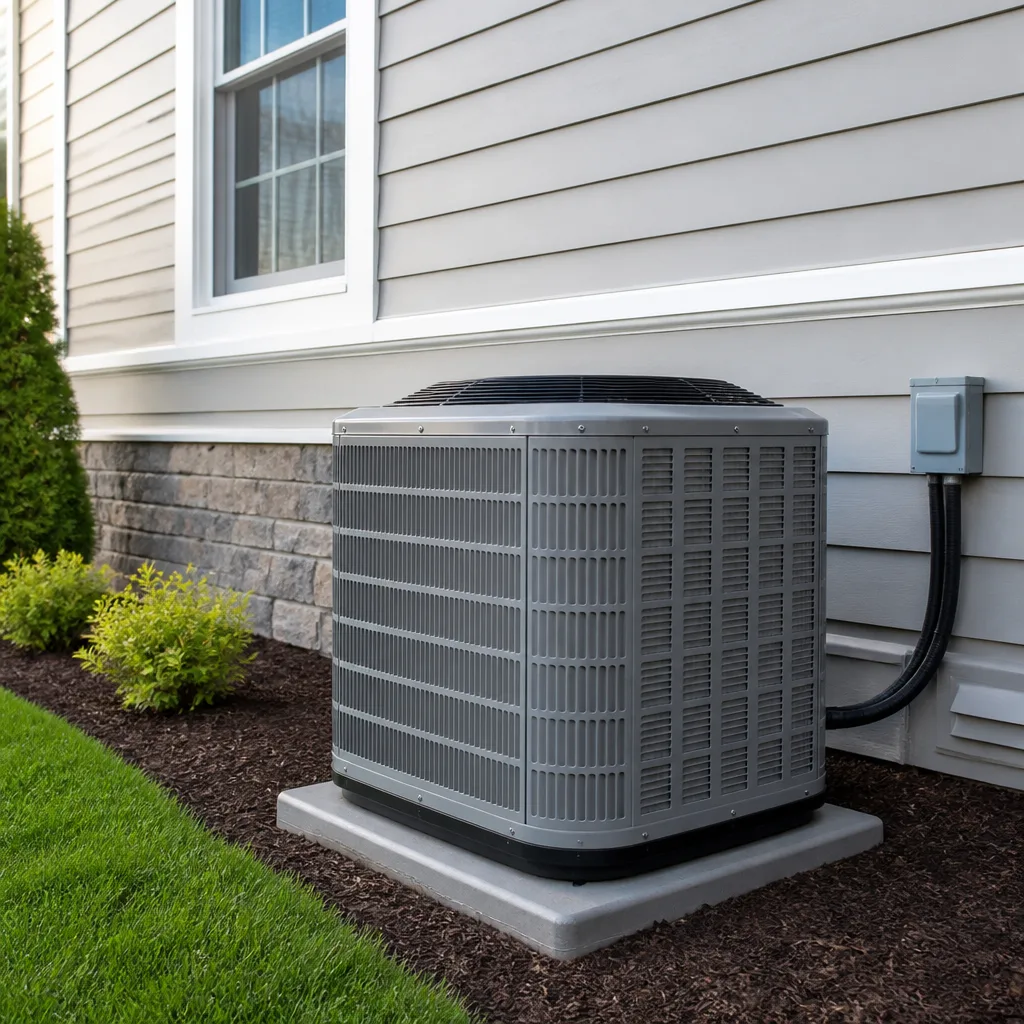 Carrier
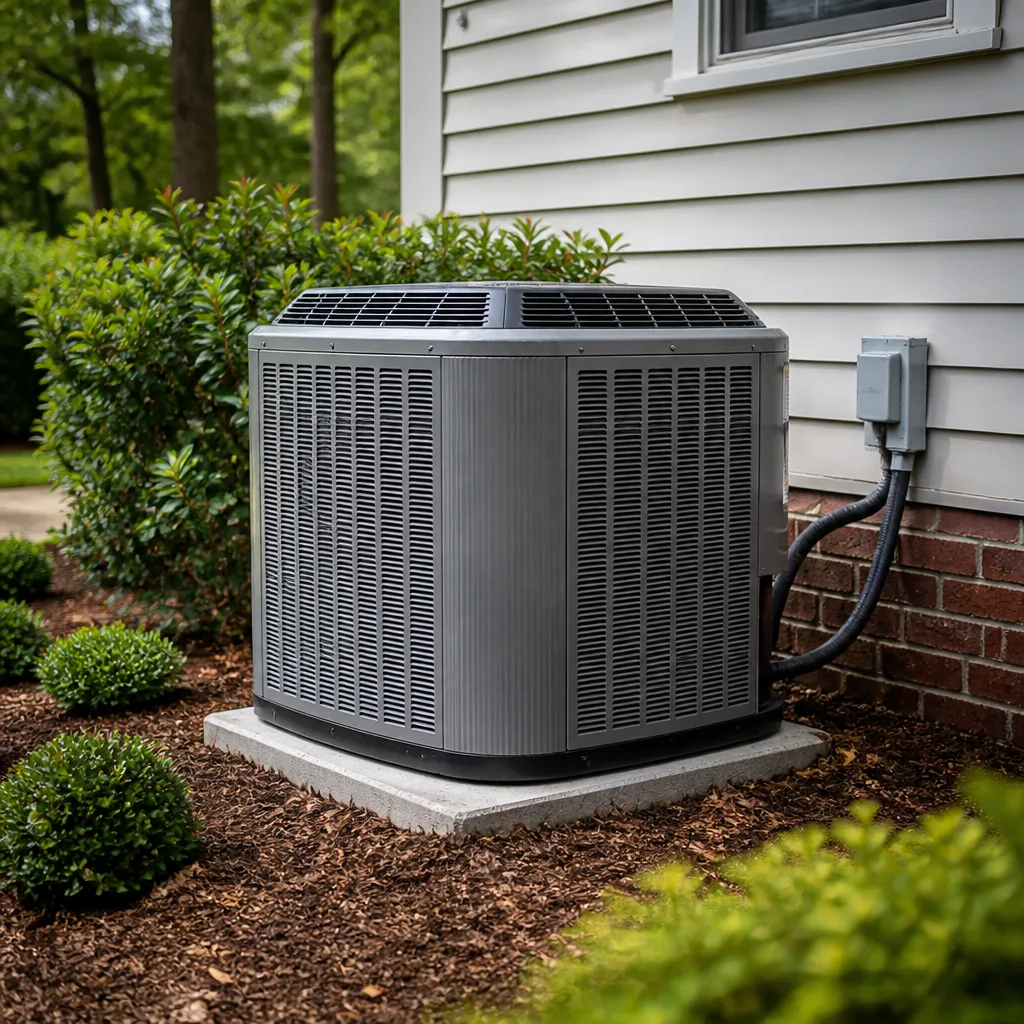 Trane
Trane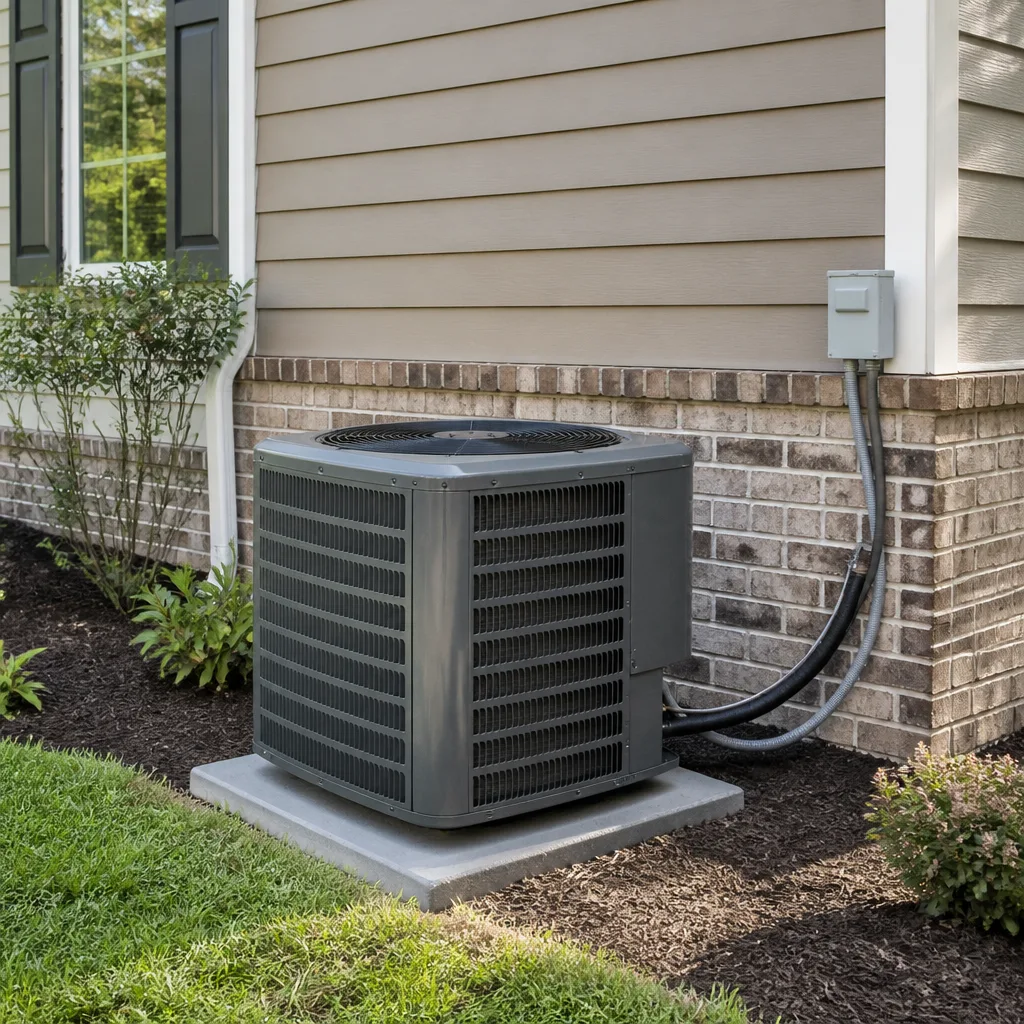 Goodman
Seasonal tune-up and full diagnostic on your Carrier, Trane, or Goodman system - readings shown to you before any repair is proposed
Diagnosis first, numbers second - you approve the repair price before a single part goes in.
Get your free estimateTrane Capacitor Replacement: The Brooklyn Owner’s Guide
In Brooklyn, a Trane capacitor replacement typically costs between $150 and $400 installed, depending on whether your system needs a single-run capacitor or a dual-run capacitor and how much access your condenser or air handler gives our technicians. We stock Trane-compatible capacitors on our trucks for the most common residential models, so same-day replacement is usually possible when your AC won’t start or the compressor hums without spinning up. Most of our Brooklyn customers discover the capacitor failed on a hot afternoon: the thermostat clicks, the indoor fan runs, but the outdoor unit sits silent except for a low buzzing sound, or the fan spins slowly and the air from the registers is barely cool.
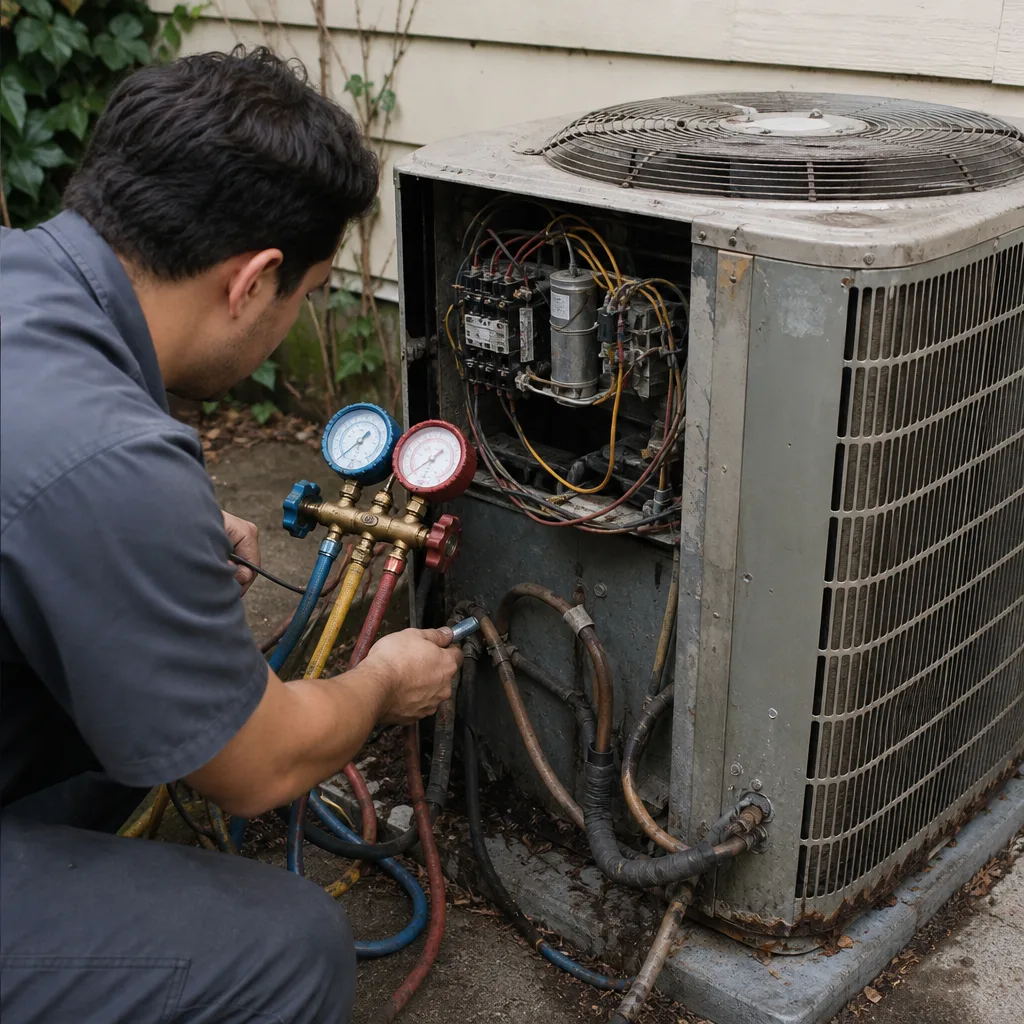
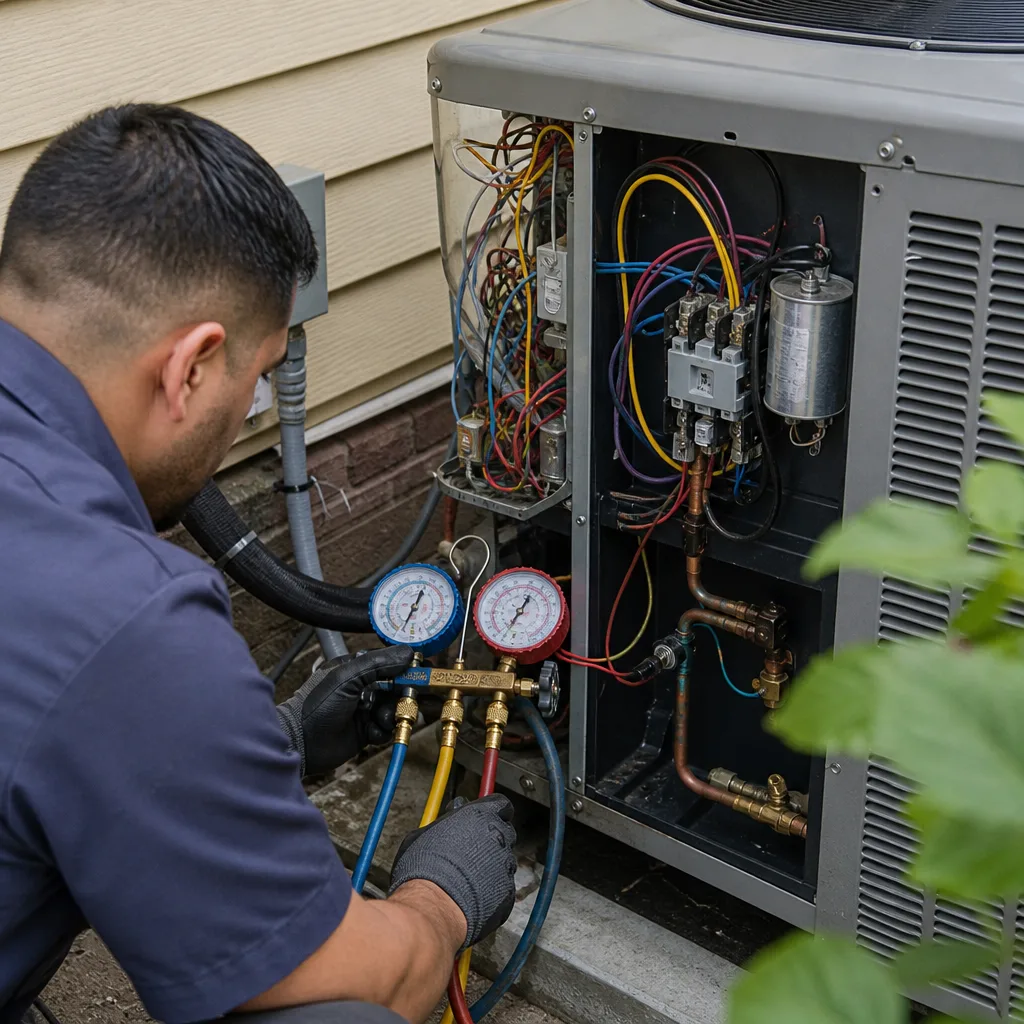
When that happens, the furnace or air handler is doing its job. The capacitor is what gives the compressor and condenser fan motor the starting jolt they need to fire up. Without it, you get a system that is awake but can’t move. Luis Serrano has replaced enough of them to spot the pattern early: the capacitor is a small metal cylinder, often silver or grey, about the size of a salt shaker or a V8 can, mounted inside the outdoor service panel. It’s the part that fails most often in older Trane units during Brooklyn’s first heat wave of the season, because capacitors wear out gradually from heat exposure and repeated starts, not from a sudden event.
Which Trane Models This Applies To
We replace capacitors across the Trane residential lineup: XR, XL, XB, and RTU lines, plus the common XR13, XR14, XL16i, and XL18i condenser models we see all over Brownstone Brooklyn and the surrounding neighborhoods. If you have a Trane packaged unit on a roof, a split system condenser behind a rowhouse gate, or a Trane air handler in a closet, the capacitor inside is a service-replaceable part and our technicians carry the common sizes.
Here’s where Trane owners run into a gotcha: Trane often ships units with capacitors that are labeled with a slightly unusual voltage rating, such as 440V instead of the more common 370V, and some older Trane models use a 5-microfarad fan capacitor instead of the 7.5 or 10 microfarad many generic parts assume. The label on the old capacitor is specific, and a mismatch in microfarad rating, within about 5%, changes how fast a motor starts or how hot it runs. We always read the label off the actual part before removing anything, and we photograph it for our records. That’s one checkable detail. A second one: Trane’s dual-run capacitors in humid coastal Brooklyn weather tend to leak dielectric fluid from the pressure-relief seam before they fail electrically, leaving a small oil stain on the capacitor body. When we see that during a tune-up, we flag it for replacement before it strands you on a 92 degree day.
On the OEM versus aftermarket question: Trane does not manufacture its own capacitors, but its OEM-labeled parts, typically made by a company like AmRad, Packard, or Titan, are selected to meet a specific tolerance. A quality aftermarket capacitor from those same manufacturers is often identical and costs less. We do stock both, and we will show you the label and give you the choice if you want it. What we will not do is install a cheap low-tolerance capacitor to save a few dollars, because in our experience the savings show up in thirteen months and you’re calling us again in July. Meadowsweet Heating and Air Brooklyn is an independent service provider and not affiliated with Trane, which is fine by us: it means we can be honest about the alternative parts without a franchise markup. We also stock capacitors for Carrier and Lennox units.
Styles & brands we work with
Signs Your Trane Capacitor Replacement Is Failing
- The compressor hums for a few seconds, then clicks off: The capacitor can’t supply the starting torque the compressor needs, so the unit overloads and trips the thermal protection. This is the classic dead-capacitor sound: a low electric hum followed by a metallic click.
- The outdoor fan doesn’t spin or spins slowly: Many Trane capacitors are dual-run, meaning one can runs the compressor and another runs the fan. When the fan side dies while the compressor side still works, the fan sits still and the compressor can overheat, which shortens the compressor’s life.
- The AC starts sometimes and not others: A capacitor that’s degrading gradually may give just enough of a start on a cool evening but fail to spin the compressor on a hot afternoon. Brooklyn brownstones and old rowhouses often have long wire runs from the panel, and voltage drops on hot days make a marginal capacitor fail more predictably.
- A small oil stain or bulged top on the capacitor: When you open the service panel, the capacitor looks slightly domed, has a tiny rust-colored spot at the seam, or smells faintly like warm plastic. That’s heat damage and it won’t improve; it fails fully, sooner rather than later.
- The system tripped the breaker: A failed capacitor can draw a hard starting current that trips the breaker. If you reset it and the unit hums but doesn’t spin, that’s not a breaker problem; it’s a starting-circuit problem. Call before you reset it more than once.
See the difference
 Before
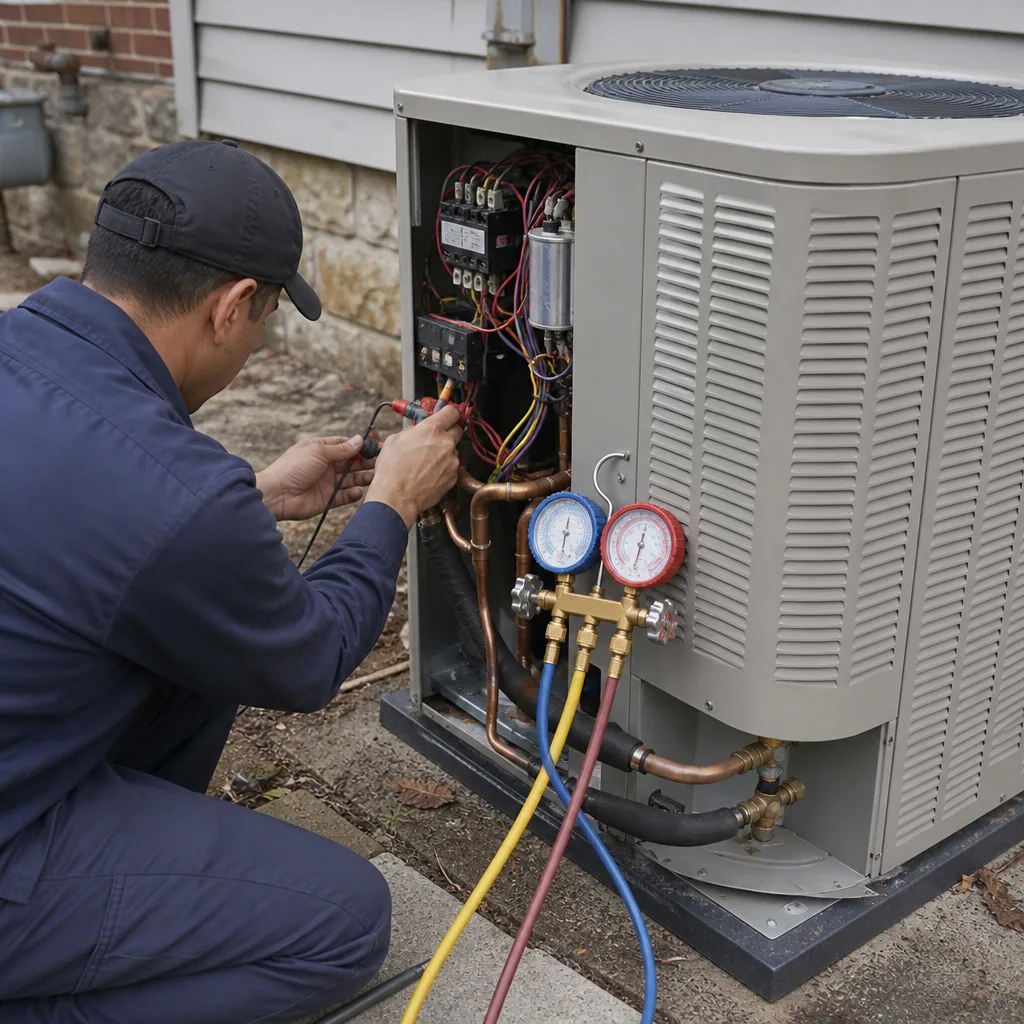 After
After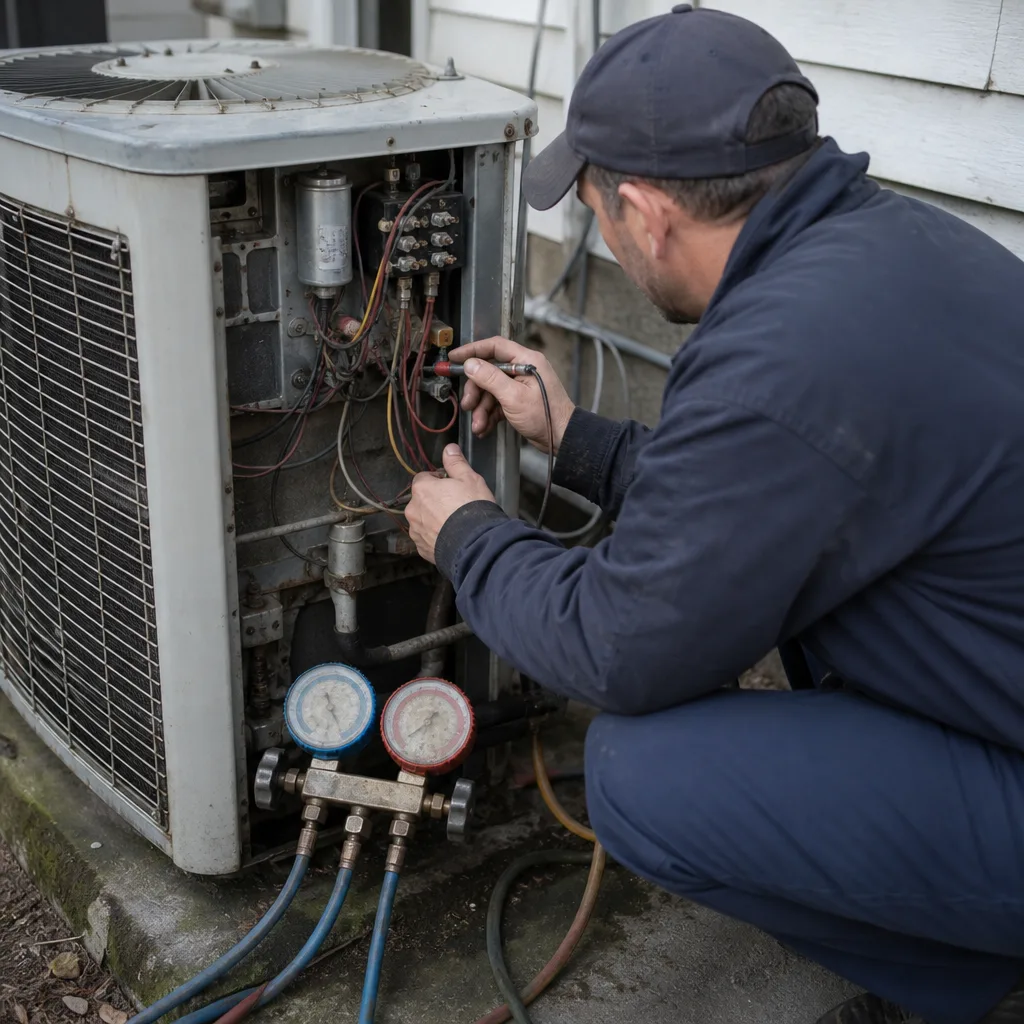 Before
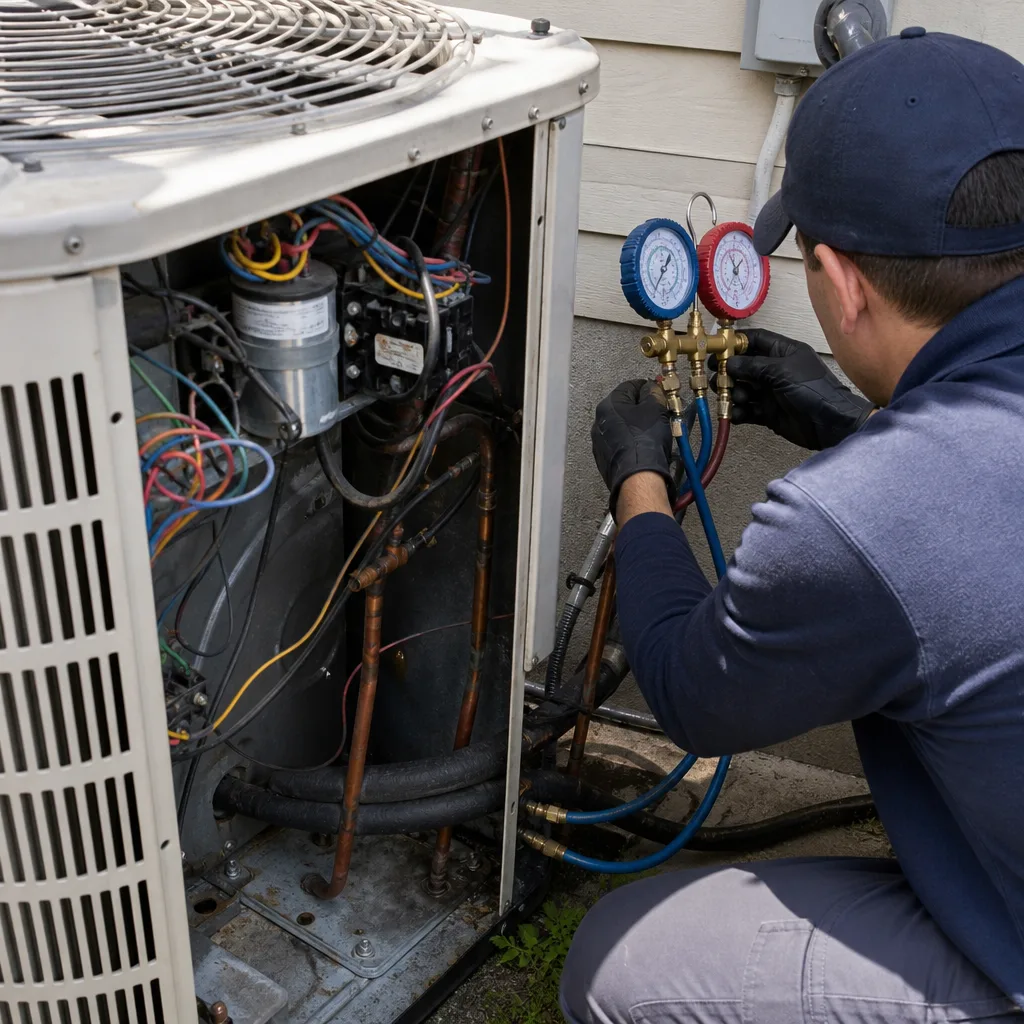 After
After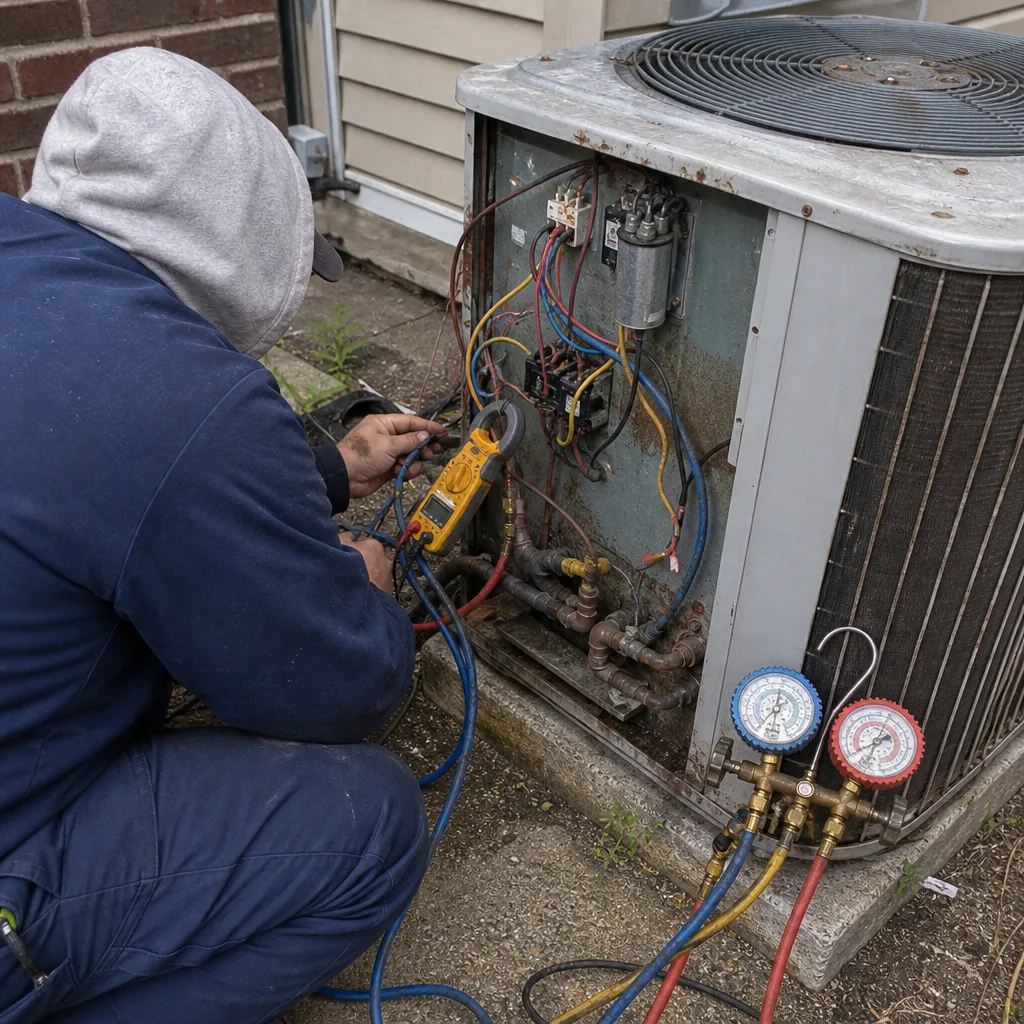 Before
 After
AfterReplacement Cost & What’s Included
In Brooklyn, expect a Trane capacitor replacement to run roughly $150 to $400 installed, which includes the part, the trip, and the labor. A single-run capacitor job for an air handler or condenser fan on its own usually lands in the $150 to $250 range. A dual-run capacitor replacement, the more common Trane condenser job, lands closer to $200 to $400 because the part itself costs more and the technician is confirming the compressor and fan wiring against the unit’s wiring diagram before closing the panel. Most capacitor jobs take under an hour, and our truck stock for standard Trane sizes means we are typically done in one visit.
The Cedarwell Care Promise applies here exactly as it does on a full installation: you get a written price before we touch anything, so a $180 capacitor call will not become a $900 surprise at the door. Your technician will show you the old capacitor and the new one side by side, explain the microfarad rating and voltage that match your Trane’s data plate, and put the written quote in your hand before starting work. The replacement is backed by the 365-Day Done Right Promise: if anything about the capacitor installation isn’t done right within a year, we come back and make it right, no runaround and no arguing over who tightened which spade terminal.
DIY or Call Us?
We will be direct: even with the power off at the disconnect, a capacitor stores an electrical charge that can deliver a serious, even fatal, shock if handled wrong. A Trane dual-run capacitor in a Brooklyn condenser is typically charged to 370V or 440V, and enough of that charge can remain after the breaker is off to stop a heart. This is not a “just discharge it with a screwdriver” article, because that is exactly the step where people get hurt. If the top of the capacitor is bulging or leaking, do not touch the terminals with anything, even a plastic-handled tool.
What you can safely do is verify the symptom: confirm the thermostat is set to cool, the breaker is on, and the outdoor unit is humming but not spinning. You can also check that the condenser coils are not buried in leaves or a garbage bag, because air-restricted Trane units overheat and stress the capacitor further. After that, call us at (315) 873-2984 and describe what you found. Our technician will arrive with the right part, the right test meter, and the right respect for what a residential capacitor can do. We’ll also have shoe covers and drop cloths, because in Brooklyn, the outdoor unit is often on a roof deck or a concrete pad right next to the kids’ play area, and we don’t want anything but footprints to show we were there.
“Tell me what the room feels like – I can usually figure out the rest from there.”
FAQs
Most Trane capacitors last between 5 and 15 years in Brooklyn’s climate, but heat, voltage swings, and frequent cycling during humid summers put the real-world average closer to 7 to 10 years. A power surge or a heat wave can kill one in its first year, which is why we always check the capacitor during a tune-up.
A capacitor cannot be repaired; once the dielectric inside is degraded or leaking, the only correct fix is replacement with a matching microfarad and voltage rating from a quality source. Reconditioned or “repaired” capacitors in the market are not safe for Trane equipment and won’t last.
For a standard Trane condenser, the swap usually takes 30 to 60 minutes from panel open to panel closed, including verifying the old part’s label, changing the capacitor, tightening the spade terminals, and testing start-up under load. If we’re already at your home for a diagnostic, we can often do it in the same visit.
Yes, our trucks carry the common Trane single-run and dual-run capacitor sizes, including the 440V versions many Trane condenser models use. If your unit needs an uncommon size, we can typically source it within a day and schedule the replacement at no extra trip charge. Call (315) 873-2984 for a free estimate.
Written by Luis Serrano, Owner, Meadowsweet Heating and Air Brooklyn at Meadowsweet Heating and Air Brooklyn, serving Brooklyn and nearby areas.